

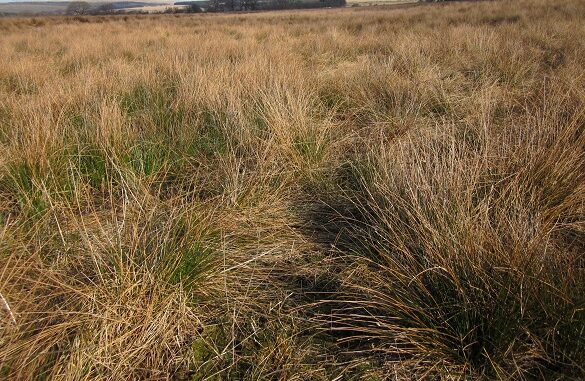
For the last 10 years, upland farmers and land managers in the North Pennines have noticed a marked increase in common rush (Juncus effusus), known as “soft rush.” It is by far the most widespread and problematic rush species in improved and semi-improved grassland, particularly in upland and marginal areas, to the point where it is becoming dominant in some permanent pasture. This change is not accidental, nor simply a consequence of agri-environment scheme options or a lack of management. Since 2020, academic studies from the Universities of Lancaster and Liverpool have been pointing out the growing evidence that shifting rainfall patterns linked to climate change are an important driver of this change, which is not going away any time soon.
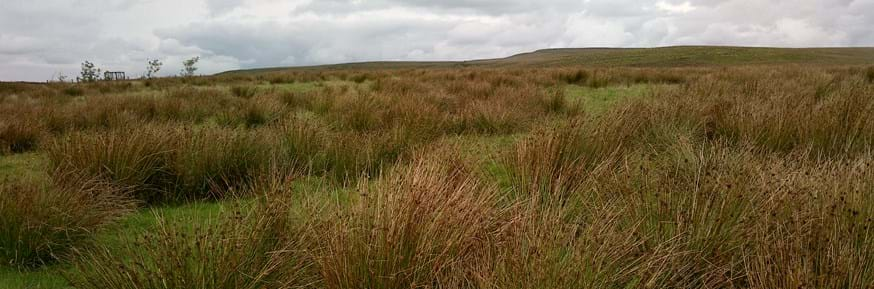
Long-term climate records for northern England show that upland areas are experiencing wetter conditions overall, particularly during autumn and winter. Rainfall is increasingly falling in heavier and more intense events, rather than as steady, moderate precipitation. This change is in line with climate-change projections for the UK, which suggest wetter winters, higher water tables, and more frequent extreme rainfall episodes. For upland soils — often shallow, compacted, and slow-draining — this means longer periods of waterlogging and reduced soil aeration. Even where total annual rainfall has not increased dramatically, the way rain falls is enough to change soil conditions on the ground.
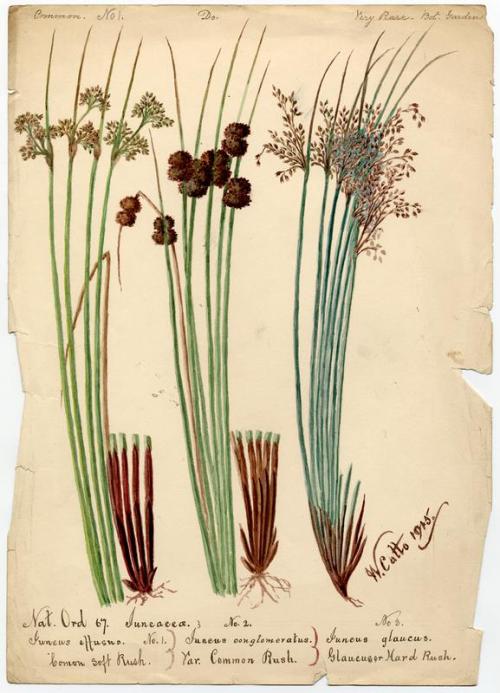
Common rush is exceptionally well adapted to wet, poorly drained soils. It tolerates anaerobic conditions that most pasture grasses cannot, spreads readily, and produces abundant seed. Where soils remain saturated for long periods, rush gains a competitive advantage and can quickly out-compete productive forage grass species. Heavier rainfall worsens soil compaction and waterlogged ground, which not only encourages the establishment and persistence of rushes but restricts access for grazing when it is too wet for stock.
Traditional or historic drainage systems that are no longer functioning as intended do not carry the water away. On our pastures, extensive drainage using clay pipes and tiles was carried out at intervals over the 20th century, but these are now mostly in need of renewal and replacement with modern systems such as High-Density Polyethylene (HDPE) perforated pipe.
These combined changes create ideal conditions for uncontrolled expansion of rushes into pastureland – a trend predicted by our own climate scientists at least five years ago, and now a reality.
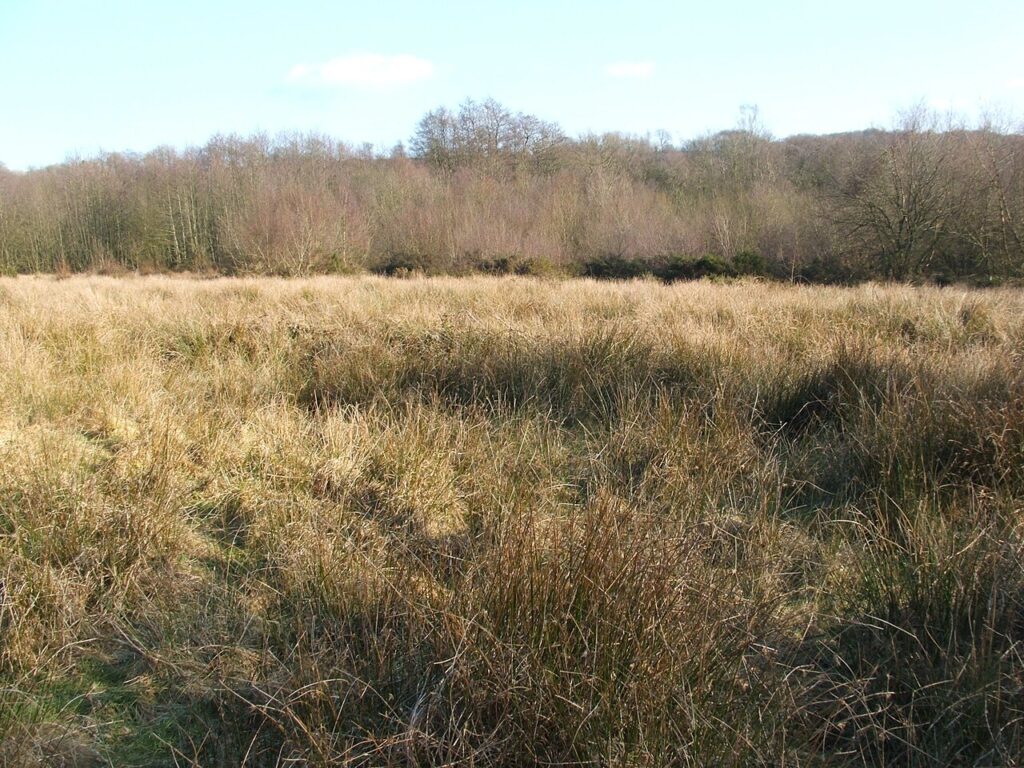
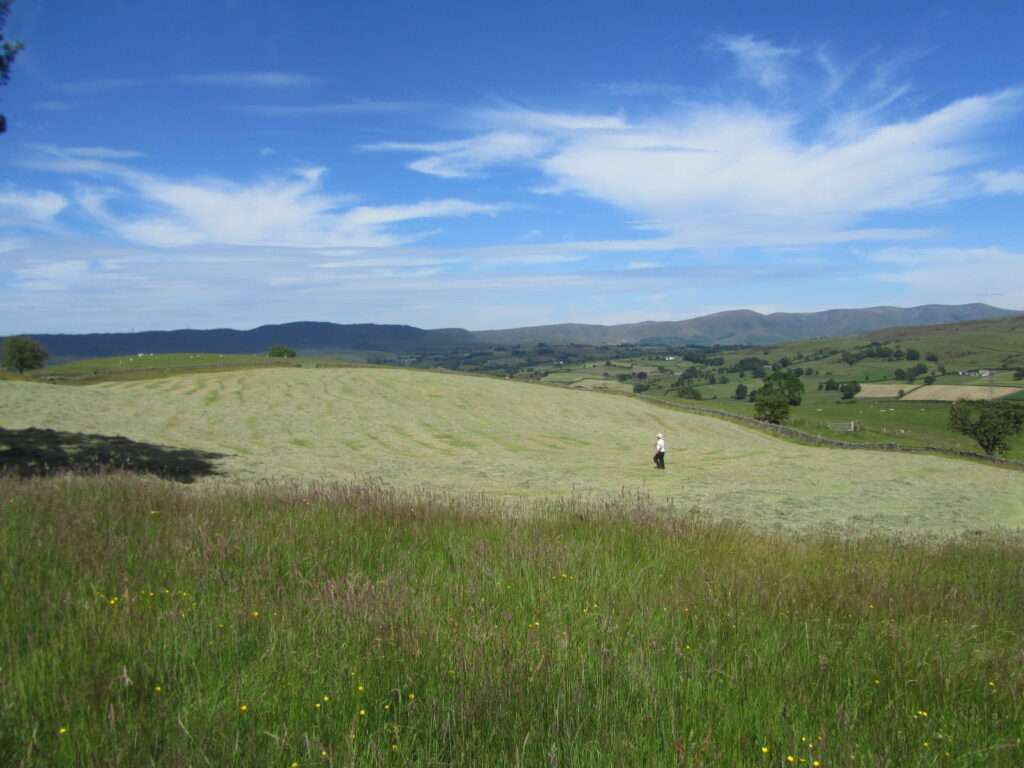
Traditionally, in the Westmorland uplands, rushes were cut with scythes and harvested annually, which not only controlled their spread but provided winter bedding. Since the twin revolutions of farm mechanisation and agri-chemicals, alongside wider social changes that have reduced the rural workforce, rush control has typically relied on regular cutting with a tractor and pasture topper, followed by chemical treatment. Both of these control methods now present their own difficulties.
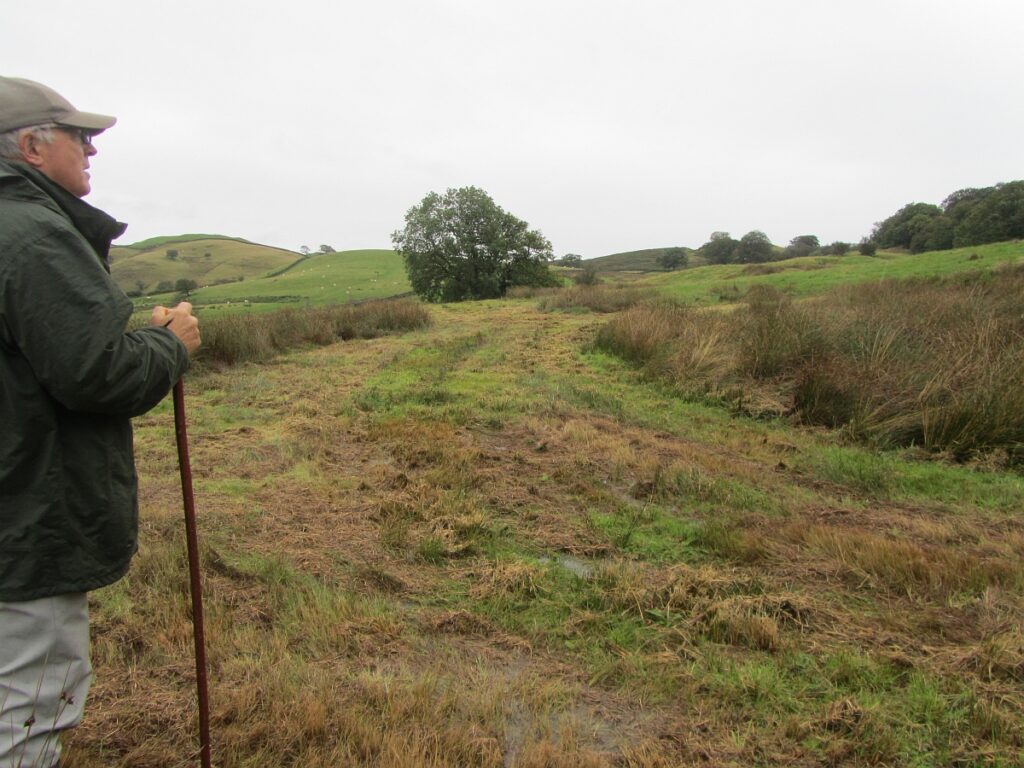
On the one hand, wetter ground and the sensible prioritisation of protection for ground-nesting birds mean that opportunities for mechanical control are increasingly limited. Farm tractors — particularly those used by contractors — are becoming larger and heavier, and may not be able to access land after a wet summer, while the necessary second cut in winter and early spring before the nesting season begins can be impossible. On the other hand, official guidance and practice regarding chemical control can be hard to navigate.
The herbicide MCPA has been recommended as a selective treatment for Juncus effusus, and it is very effective on rushes. MCPA is highly soluble and penetrates the stems and tips of the plant, but it does not affect the rhizome, so quick regrowth is expected. The solubility also causes a knock-on problem – MCPA is highly mobile in groundwater. Where the water goes, the MCPA goes, and the water goes downhill into our drinking water systems. Monitoring of catchment areas used for drinking water has repeatedly found high concentrations of the herbicide in rivers and reservoirs during the spraying season, and water companies have reported technically challenging spikes in MCPA that are costly to remove from raw water supplies.
The cost of treating this contamination has led to discouragement of routine use of MCPA near vulnerable water bodies. The recommended alternative is glyphosate, applied with a weed wiper. Glyphosate — widely known by the brand name Roundup — is more effective than MCPA for controlling rushes because it penetrates the rhizome, so regrowth is inhibited. Roundup reduces the amount of herbicide entering watercourses because it breaks down more rapidly in the environment than MCPA. But glyphosate carries its own controversies: it has been the subject of high-profile legal cases and public concern over potential carcinogenic effects. Pesticide Action Network UK (PAN UK) and the Soil Association have highlighted potential health risks and environmental impacts, while some local councils have phased out or banned glyphosate in urban areas in response to public pressure.
For agricultural land, there is currently no single alternative to glyphosate that matches its cost-effectiveness and ease of use for control of rushes, but it is never suitable for species-rich pasture, whether or not the land is under RPA scheme options. Being non-selective, glyphosate will kill all forage plants if applied with a boom or hand lance, although if applied carefully with a weed wiper in combination with mechanical cutting it can be used effectively outside these schemes. A careful survey of plant species is needed to establish if herbicide can and should be used at all, and which chemical is most appropriate. Control of rushes by herbicide remains a complex choice.
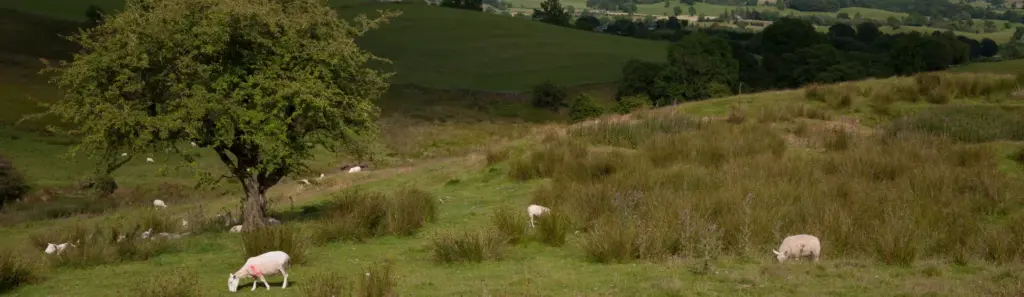
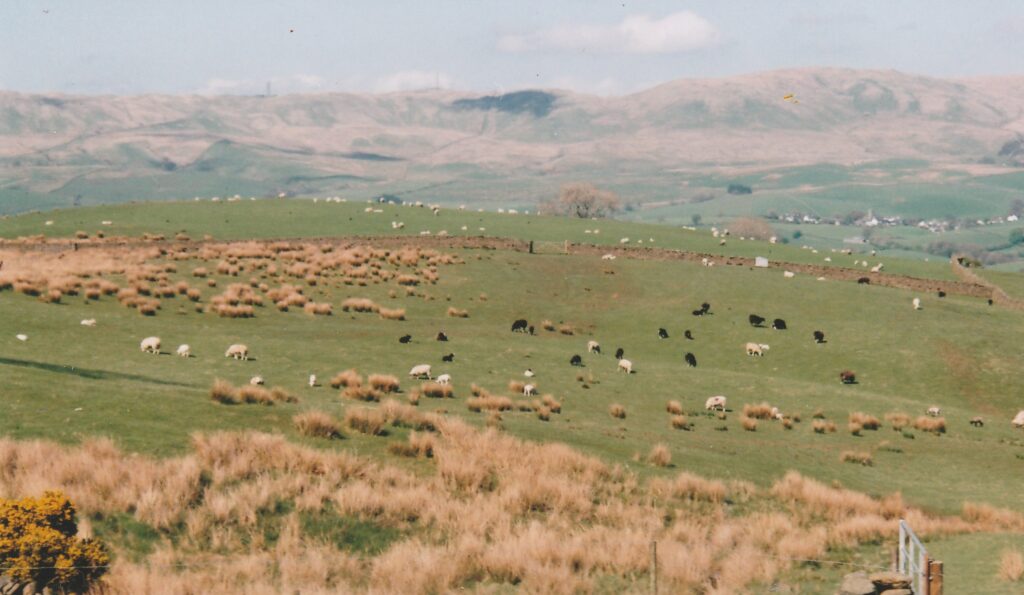
That debate continues, not only about the best method of control, but even about whether control is desirable at all. To offset the effects of grassland intensification, agri-environment schemes promote a mosaic of rush, tussocks, and open grass, supporting a wider range of wildlife, including waders, invertebrates, and small mammals. This, however, is not a simple undertaking. When patches of rush are further encouraged by climate change, they can expand rapidly, and rush-dominated swards can become as ecologically limited as most other single-species pastures. Evidence from academic studies – and from practical experience on the ground – suggests that once rush becomes dominant, the outcome can be the opposite of what was intended. Wading birds, including lapwing, curlew, snipe, redshank, and oystercatcher, rely on a varied structure of open grassland and scattered tussocks for cover, feeding opportunities, and predator avoidance, and tend not to breed where rush takes over completely. Finding the balance between a wildlife-friendly mosaic and uniform rush cover can be difficult with the limited tools available, and sometimes impossible in very wet years.
In practice, managing existing or newly created rush pastures requires a combination of careful observation, flexible stocking, and regular, targeted interventions. Techniques such as shallow drainage, mole ploughing, or strategic surface ripping can help reduce waterlogging and limit rush spread, but these are generally inappropriate for habitat creation schemes and are also costly and time-consuming. The costs of rush control may be significant for hard-pressed upland farmers, but unchecked expansion can be equally costly, rapidly reducing forage quality and productivity. As I have discovered, creating rush pasture for wildlife habitat requires planning and prioritisation of control measures to prevent the rushes from taking over. There is no such thing as a free lunch, but RPA payments can help cover the costs of management — which are necessary whether or not the pasture is enrolled in a scheme.
As wetter winters and heavier rainfall become the norm, common rush is likely to remain an increasingly dominant feature of upland pastures, demanding constant attention and adaptation of control measures. Framing the issue in the context of climate effects shifts the conversation away from blame or poor management and underscores a broader reality: upland pasture systems, shaped over centuries to suit a drier, more predictable climate, are now under pressure, with direct consequences for the resilience of our livestock farms. Under sustained wetter conditions, unmanaged rush can quickly come to dominate upland pastures, reducing both productivity and ecological value.
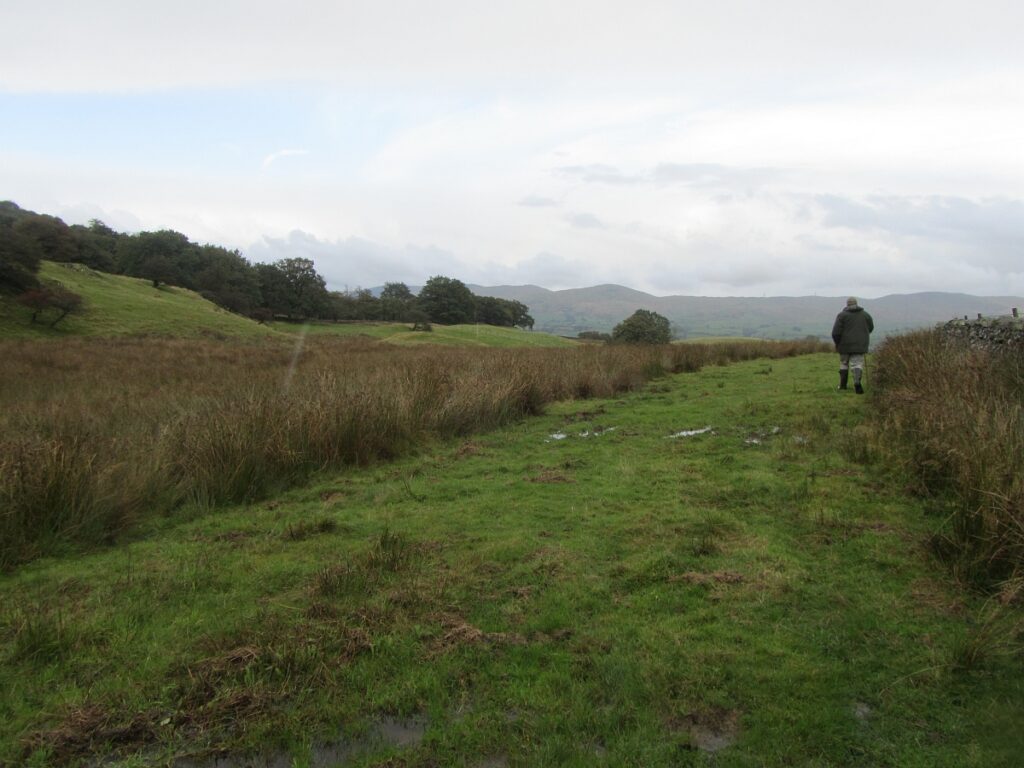
Upland Pastures:
Links to research sources:
https://news.liverpool.ac.uk/2020/06/09/invasive-rushes-spreading-in-upland-farm-fields
https://www.lancaster.ac.uk/lec/about-us/news/invasive-rushes-spreading-in-upland-farm-fields
https://www.sciencedirect.com/science/article/pii/S0048969722031771